
Matthew 5:17-48 | Deconstructing with Jesus | Alex Culpepper
Invite you to take your Bibles out. We're going to open up to Matthew chapter five this morning. We'll be just before chapter five and then a little bit into chapter five. Let's set this down here. If you don't know me, my name is Alex Culpepper.
I am the lead pastor here at Renovation Church. It is my joy on Sunday mornings in our worship services to be able to open up God's Word. And, and so we want you to engage with God's word. We believe God's word brings life and brings hope and brings clarity to who he is. And so we're just gonna walk through some scripture and you'll be able to see it up on the screen here if you don't have a Bible with you.
But we encourage you to follow along with us if you are able.
So nearly every generation of the Church of Jesus undergoes some form of what today is popularly called deconstructing. So you may have heard this term before, you may have heard people use this term, but this is what deconstructing is. Deconstructing is challenging or rejecting the perceived errors in the faith that you've received at a different time. We called this reformation. Right?
And I like the word reformation a little bit better because it's not just about tearing things down, but it's about building good things up. Right? But this is the idea that we're getting at. There are things that we've received that kind of need to be rebuilt. So as we talk about deconstructing, there are just some things to take note of here.
First of all, note that the errors are perceived, meaning that they may be errors, but also they may not be errors. Right. It has to do with the perception of the person who is doing the deconstructing, which means that that person may or may not be correct. The second thing to take note of in the process of deconstructing is that church hurt is often involved. Sometimes that hurt comes from abusers and manipulators and people who are power hungry and don't know what to do with their power and they mistreat it.
Sometimes that hurt comes from a heart that harbors offense. Right. And easily takes offense. Right. And so we have to be able to differentiate these things as we talk about deconstructing.
Sometimes deconstructing happens as a result of zeal for the Lord. Right? Like a heart that is passionate about the things of God and wants to see more of the things of God takes place. But then sometimes it happens just because, like I don't see things aligning with my perspective of what I believe to be right and not all. So it's just the reason I do this is because I want to say we should be really clear that not all deconstructing is bad.
Right? There are some good times to sit back and reevaluate the faith that you've received and question it and figure out how to move forward. But then I'd also say that not all deconstructing is good as well. And conversely, with that, you know, some deconstructing happens for righteous purposes and some deconstructing happens for unrighteous purposes. Excuse me.
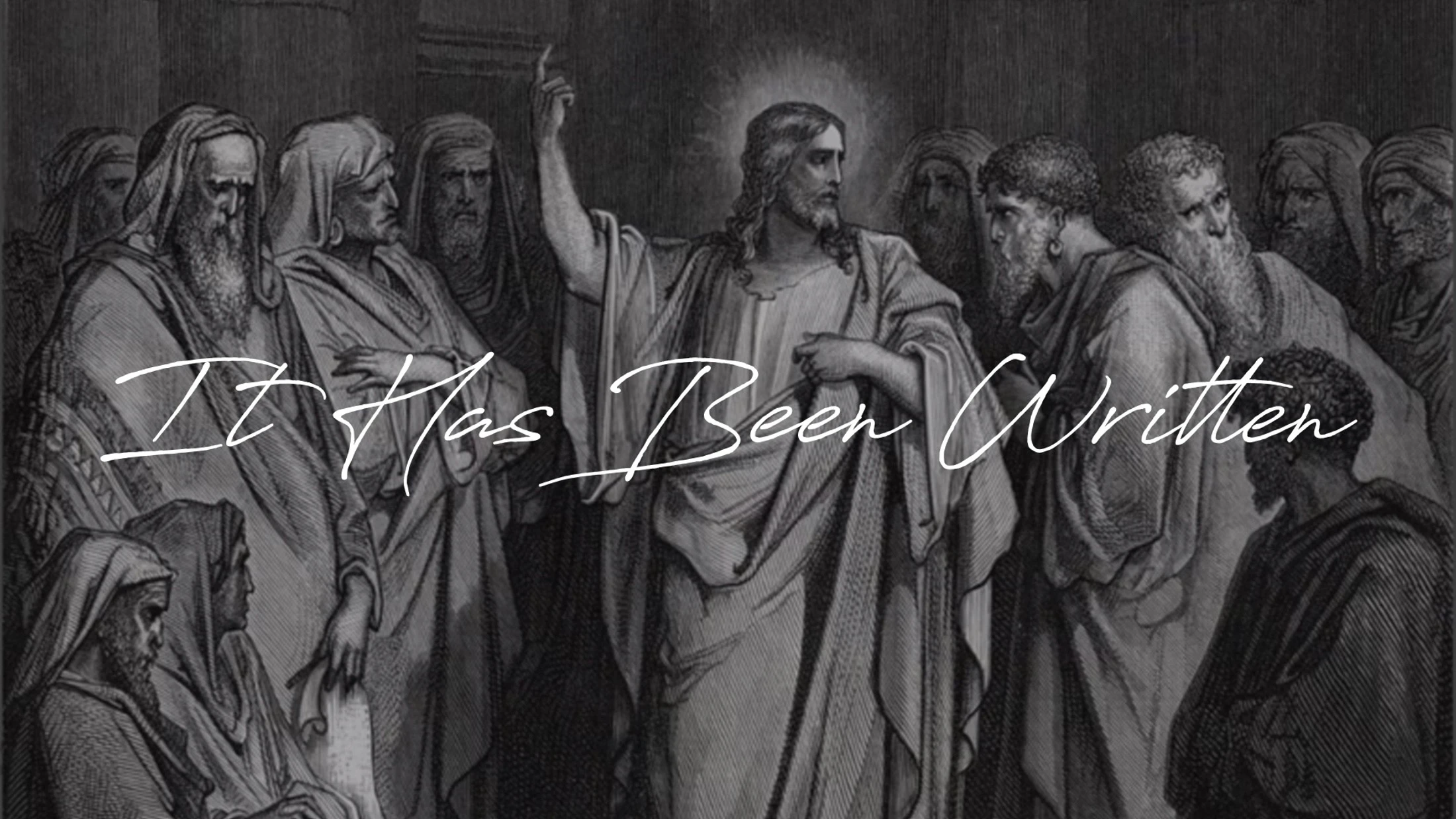
There we go. So today I think it's helpful for us to look at what I've titled this message, which is what does it mean not just to deconstruct, but to deconstruct with Jesus? Like to invite Jesus into the process of deconstructing. So today we're continuing a series called It Has Been Written. And we're looking at significant times when Jesus quoted the Old Testament, most significantly the book of Deuteronomy, which happens to be his most quoted book of the Old Testament.
And we're looking at kind of how the people of Jesus Day took the writings of the Old Testament and they used those writings not to kind of obey the Lord from their heart, but they used those writings to prop up a religious system that was ultimately at odds with God's heart. And today we're looking specifically at a portion of the Sermon on the Mount. Now, the Sermon on the Mount, this is Jesus most well known sermon. Before we get into it, we kind of have to know what Jesus purpose was in this sermon. See Jesus.
If you remember last week, we talked about Jesus temptation in the wilderness. Jesus is coming fresh off of his defeat of Satan in that temptation. And then he moves immediately into calling his first disciples. After he overcomes Satan in that temptation, he's going to go and he calls Peter and Andrew and James and John to. And then he launches from that point into personal ministry.
And so I just wanted you to hear how the Gospel of Matthew summarizes Jesus's personal ministry at the beginning. This is what it says, verse 23 of chapter four. So this is right before chapter five. He went throughout all of Galilee. Galilee is the northern area of Israel, right?
And this is where Jesus is doing most of his ministry. He's not down by Jerusalem. He's up in the area that he grew up up in. He went throughout all Galilee teaching in their synagogues and proclaiming the gospel of the kingdom, right? And then healing every disease and every affliction among the people.
Now, the gospel for the kingdom, or the gospel of the kingdom for Jesus, is this. Jesus had a message, and the message was repent, for the kingdom of heaven is at hand. That was Jesus's message when he was pro. It says he proclaimed the gospel of the kingdom. This is primarily what he was saying.
What that means is that there's like a new order of things. There's a new way that things are working. He's saying, you are currently in the kingdom of darkness, but the kingdom of light has come near to you. And so what you need to do is you need to repent, which is a way. It literally means.
It's. The word is metanoia in Greek. It means to change the way that you think, to change what you know, to change your mind about something. You're used to the kingdom of darkness, and now the kingdom of light has come near to you. And he says, the kingdom of light has come the way that you can know that.
Well, because I'm here, the King is here. And so it goes on in verse 24 and says, so his fame spread throughout all Syria. Now, what's interesting, Syria is not in Galilee. Syria is outside of Galilee, which means that there's something happening in Galilee that is spreading Jesus reputation throughout all Syria. And so.
And so people from Syria, which is the land of the Gentiles, are bringing their sick people into Galilee because they heard about Jesus and how Jesus heals people. And so they brought him all the sick, those afflicted with various diseases and pains, those oppressed by demons, those having seizures and paralytics, and he healed them. We often think of Jesus as kind of, you know, if you think about the Gospels and we talk, we talk about Jesus and we ask questions about Jesus healing and his decision making and all that stuff. You might think of Jesus as like, well, Jesus is picking and choosing who he's going to heal and who he's not going to heal. Not in this case.
In this case, they brought him all the sick and he healed all that. They brought him. Every person who came to him for healing, he healed. In this situation, at this point, this his ministry, he's healing without discrimination. And he did not deny healing to any person who was seeking it.
So verse 25, it says great crowds followed him from Galilee and the Decapolis and from Jerusalem and Judea, from beyond the Jordan. So it's worth saying people have never seen anything like this before. Nothing like what They've seen with Jesus the things that Jesus does. Like, Jesus goes up and teaches and unclean spirits just reveal themselves. They've never seen, like, unclean spirits just, like, show up and start speaking out of people.
But that's happening here. The problems that these spirits cause leave when Jesus tells them to go. Jesus restores right order to pains and diseases of the body that have lasted for years. And along with it, he teaches about the kingdom of God, which we have to be clear. The kingdom of God is not a religious system about managing sin.
That's not what it is. That the kingdom of God is a kingdom that brings liberation from the power of sin and the power of evil. And so the natural result of this is, as Jesus is doing all this, that he amasses a following, that there are people who just want to follow Jesus because they've never seen anything like this. So from this point, Jesus now preaches the Sermon on the Mount, and he's preaching to those, all of the people who have started to follow him, all of the people who are interested in who he is because of his power and because of the things that he proclaims. And his purpose in doing this is so that he can help them understand the nature of the kingdom of God.
And he does this the way that he does this is that he does it by contrasting the kingdom of God from the prevailing religious model of the day. Right? He, he, he essentially, Jesus is. What he's gonna do is he's gonna take God's word and use God's word to deconstruct the common understanding of what it means to relate to God so that he can show that the people, that his kingdom is different from their understanding. And so then that gets us into Matthew 5, 17.
So this is in the middle of a sermon, he goes through the Beatitudes and says, blessed are the poor and the meek. And he talks through about being a light on a lamp stand, right? But here he kind of is giving what I would call, like the thesis statement of the kingdom. He's kind of setting out, like, if you want to know how I differentiate myself from what you're used to, let me explain it to you. So verse 17.
Do not think that I have come to abolish the law or the prophets. I have not come to abolish them, but to fulfill them.
So to fulfill means to complete what is partial, right? There's something that you have a part of, and I've come to broaden it out to help you understand the fullness of it, basically. Here's what he just said. Jesus says you have received an underdeveloped relationship to God's Word. That's what he's telling the people, right?
You're used to this religious system and you're used to these religious teachers. And you need to know that the system that you've received from them is an underdeveloped relationship to God's Word. And Jesus is saying, and I've come to develop your relationship to God's Word. I've come to fulfill what has been partial up to this point. And the reason he's doing this, the reason he's saying these things is he's clarifying for them.
You're going to hear lies. You're going to hear the teachers and the other people tell lies about the things that I've come to do. You're going to tell them that I fight. They're going to tell you that I fight against God's Word, that I want to challenge God's Word, that I deny the validity of the prophets of old. And you need to know that when you see me challenge the system of the day, and you see me present differences between my kingdom and the status quo, this is not about me undoing God's Word, because I'm actually here to bring maturity to the very immature version of faith that you have received.
He's essentially saying, hey, you, like, you think that you're being led by people who know the law and the prophets, but in reality they really have only. They've really only taken like the introductory level course in it, right? They've only started at the beginning, right? And he's saying, I'm here to kind of fill up what, what you've lacked from them. They've only given you a small part.
I'm like, here to teach the intermediate and the advanced level courses. That's what Jesus is saying. And so verse 18. For truly I say to you, until heaven and earth pass away, not an iota, which is the smallest Greek letter. That's what an iota is, right?
And it's just a way of referring, like not even the smallest part, not a dot, will pass away from the law until all is accomplished.
Jesus said, the law will always have significance and purpose. It will always have purpose and be crucial to the development of the faith of God's people. So I just want to give you a little bit of a warning here. I just want to tell you you need to be wary of people who will say that we don't need the Old Testament scriptures. You just need to be aware.
And there are people, you think, I'm like, I'm not joking about this. There are people, popular teachers who actively teach that, you know, that's a less important thing thing. Like we don't really need to pay much attention to that. I want to tell you, there's a reason that we teach a lot of Old Testament at this church, right? There's a reason that we teach a lot of the Hebrew scriptures because, number one, I mean, those are the scriptures that the New Testament church had.
They didn't have the New Testament scriptures that we have today. They only had the Old Testament scriptures. And they grounded themselves in those scriptures. And indeed, Jesus, when he appears to the two disciples on the road to Emmaus, he opens the scriptures to them and says, actually, when you read and understand the scriptures through who I am, you can see me on every single page of the Scriptures.
Because God, there is not a God of the Old Testament and a God of the New Testament, right? God is not different in the Old Testament than he is in the New Testament. The God who is merciful and loving is clearly evident on the pages of the Old Testament. And the God who has justice and recompense against his enemies is clearly evident on the pages of the New Testament, right? So these things are not in conflict with each other.
There is one Yahweh God who has progressively revealed more and more of himself throughout history. And he has shown himself to to be the same yesterday, today, and forever. And so Jesus goes on in verse 19 and says, Therefore whoever relaxes one of the least of these commandments and teaches others to do the same will be called the least in the kingdom of heaven. But whoever does teach them, does them and teaches them will be called great in the kingdom of heaven. So Jesus is now speaking to those within his movement who will be teachers.
And he's telling them, hey, we don't want to do what the current religious teachers do. They pick and choose places where they want to relax the law over here and maybe tighten the law over here. And Jesus says, we're not going to do that. We're going to listen to all that God's word has to say. So we just need to be aware when Jesus deconstructs, he stays grounded in God's word.
So like I said, deconstructing is the term that's being used today. The idea is not a new idea because I actually believe that the church has been reforming itself throughout history, right? We've always been looking. Because here's the thing. The traditions of man have a tendency to creep into how we practice the faith and the things that we do.
And sometimes we can make such a big deal out of our traditions that we actually elevate them, maybe on an equal playing field with scripture, maybe we even elevate them above Scripture. And so the call is always to make sure that we uphold God's word above any traditions and that we don't let the traditions inform how we necessarily interpret God's Word, or we don't let the traditions change God's Word, right? So our Lord and the Scriptures, they teach us to be a people who are not given over to these things. So let me. I'm just.
The reason I'm helping us understand that is because there's a problem with the current movement of deconstruction that's happening today. And it's not, like I said, it's not wrong to deconstruct. But in the current movement, the deconstructing that's taking place is largely taking place based on what makes me feel comfortable. I was listening to a podcast recently with a couple of philosophers. They're not necessarily Christians, right?
So just so you know that they're not, like, biased towards a Christian perspective, but they're just trying to think about the history of, like, recent history, like, within the last five, 600 years. They talked about, you know, the medieval period, which is more like. You could think of it as the age of faith, right? Where people made decisions and responded to their environment based on faith. And whether that faith is Islam or Christianity or whatever, people are very much grounded in faith and spirituality.
Then in the 1700s to about the early 1900s, you could call that the age of reason, right? Where people were like, no, we can know, and we can observe the world, and we can think and understand. And then based on our reason, we will intuit things about the world. We'll make decisions based on how we are observing the world. And then they came to describe the age that we're living in today.
And they said actually that this is the age of feeling. Like, if you were to look across the way that people made decisions and respond to their environment, that you could largely define today, the world that we live in today, as the age of feeling. Did you know that the Bible speaks of an age of feeling in the land of Israel in the Book of judges, judges 21, 25. In those days, there was no king in Israel. Everyone did what was right in his own eyes.
Everyone did what feels right to me. And the current movement of deconstructing your faith. I'm not saying that everybody who deconstructs is doing it like this, but there is a push within the movement to say it's valid and right to deconstruct and ground it in what feels right to me. Now least you hear me, build a caricature of the person that you think I'm talking about. So sometimes you need to know that the feelings that this is based in actually come about as the result of abuse that a person has experienced within or because of their faith tradition, right?
That that's where these feelings come from. So they're deconstructing actually the thing that abused them. But instead of seeing that abuse as a failure of a person or persons, they see it as a failure of a system, right? And they see it as a failure that they react against the tradition and then everything that the tradition is based in. But at the end of the day, the sense of truth and right is coming from feelings and a response to the environment.
And that's why Jesus says here, the reason I'm pointing all of this out is because Jesus is saying here, as I begin exposing the brokenness of today's traditions, you need to know that I am staying anchored in God's word, staying anchored in what God has revealed. And so he's saying, I'm not going to deconstruct God's word or the law. He's going to deconstruct the traditions of man in a way that is thoroughly grounded in God's word. So then he swings for the fences. In the next verse, in verse 20, he says, for I tell you, unless your righteousness exceeds that of your current religious teachers, unless your righteousness exceeds that of the scribes and Pharisees, you will never enter the kingdom of heaven.
The point here is to say it's not enough to rise to the bar that they're setting, right? Because if you rise to the bar that they're setting, you will still be the people who walked in darkness. If you rise to the bar, if you do what they do, you will miss the kingdom.
So Jesus, what he's doing is he's not giving them. He's not giving them a destination, right? Like, hit this mark. And if you hit this mark, you will get into the kingdom. He's giving them a direction.
He's saying, go this way, not that way, right? Like, just follow me. Like, come along with me. It's not the way that they're going. Because if you go the way that they're going, you.
You're just Gonna try to rise to their bar and it's not gonna be enough. Would you just go the way that I'm going? Would you follow me? It's an invitation into a different way of relating to God and the world. See, Jesus here, he's not gonna answer every question that they have about faith in life.
He is giving a defense of his ministry and his way. It's called the way. You guys watch the Mandalorian, right? Guy says, this is the way. Jesus is telling them this is the way.
In fact, the early Christians, the way that they were referred to, they were seen as a break off or call it a denomination, a sect of Judaism. And the Jews of the day called that sect the way. Oh, those are the people of the way. That's who they are. And so Jesus has a way.
And right now he is defending his way from the over and against the current religious order. So from here he's going to talk about showing them how the current faith that they have received in relationship to God's word, how it's deeply lacking. So 5, 21, you have heard that it was said to those of old, you shall not murder, and whoever murders will be liable to judgment. So what Jesus is now doing is he's giving examples of what he meant when he said, I've come to fill up what is lacking, right? That you need a righteousness that exceeds that of the Pharisees.
He's now going to provide six examples that make his point. That's where he goes from here. Now we don't have time to look at all six of the examples. We're going to consider three of them and understand what they reveal to us about the king and his kingdom. But here Jesus is quoting one of the ten Commandments, right?
And this commandment, it can be found both in Exodus, chapter 20, Deuteronomy, chapter 5. And he's making reference to the way that the law was enforced in Israel. So if you break this law, there is a system of enforcement. You will be liable to judgment. And the system of enforcement is mentioned in Deuteronomy 16:18.
So it says, you shall appoint judges and officers. This is the command to Israel, the command to Moses, judges and officers in all of your towns that the Lord your God is giving you according to your tribes, and they shall judge the people with righteous judgment. Jesus is saying, you know, if you murder somebody, you're going to have to answer for it. And I love, I love that this is where Jesus starts, because I don't know if this is how it worked. Then.
But every person who is trying to prove themselves acceptable to God, you always kind of start here, right? You always say, well, of course God would accept me. After all, I haven't murdered anyone. As if that's the bar that you have to rise to, right? And this is where Jesus shows us what he means when he says that their relationship to God's word is lacking.
Because he goes on in verse 22 and he says, but I say to you that everyone who is angry with his brother will be liable judgment. And whoever insults his brother will be liable to the council. And whoever says, you fool, which is the term is like essentially saying, I mean, excuse me, but it's kind of like saying, what an idiot, you know, that's kind of what he's getting at there. You fool, will be liable to the hell of fire. So Jesus here is obviously talking about what is going on in the heart.
And you know what human courts can't do? Human courts have no ability to judge the heart. They can't do it. And so what Jesus must be talking about when he says liable to judgment, he must be talking about divine judgment. And so he gives three different ways.
He gives three different examples of how your heart can be angry with your brother. Three ways that, three ways that you can be guilty of murder without ever touching a person.
And the whole point of this is to say Jesus says, in the kingdom, God is the judge of your heart here and now. Do you have anger in your heart? You're liable to judgment. Would you speak a slanderous word against your brother liable to the hell of fire. So get this, the word of God.
The book of Hebrews says, the word of God is living and active, sharper than any two edged sword, dividing joints and marrows, able to discern the thoughts and and intentions of the heart.
The king brings. He's saying, this is what the word is meant to do. You're meant to allow me to bring the word to your heart so that the word might expose you. Do you frequently speak negative words about other people? Do you harbor grudges against other people?
Might you in a conversation about another person say, oh, they're such an idiot, right? Sometimes it's appropriate to call out foolishness, right? And Jesus is not trying to give a universal kind of coverall thing that's saying, never do this. In fact, Jesus does call people fools at different points, right? But he's trying to say, this is about your heart.
You need to let the word discern your heart.
And when God weighs your heart towards others, especially others within the community of faith. But let's not just limit it there, right? What will the judge find in your thoughts about those who are made in his image? Right? So Jesus is like, if you think the box is checked and that by checking the box that that's somehow going to get you across the line with God, think again.
Because in your heart you have the kind of stuff that will send you to hell. That's what he's saying. Every person is exposed by the words of Jesus in that moment. So in both of these cases, Jesus is looking at scripture and he's speaking into how the Pharisees, that they have actually relaxed the intent of the law. Because this was always God's plan.
This is not a new thing that Jesus is saying. God's plan was always that the law would expose the heart. That's why the 10th Commandment says, you shall not covet, right? Because if you didn't fail in the first nine, it reveals that your heart, anything that you might want that is not yours puts you at odds with God, right? And so Jesus, he's speaking into how the Pharisees, that they've relaxed the intent of the law, that they've taken the things that have been written and they've decreased their scope and significance and used it as a means for them to be able to check a box and say, I've succeeded and consider themselves to be righteous.
And Jesus is exposing the whole thing as blatantly unrighteous on the law's terms. So we're going to skip to another example. Go down to verse 33 Matthew 5, 33.
Again, you have heard that it was said of those of old, you shall not swear falsely, but shall perform to the Lord what you have sworn. Now, Jesus is speaking here to a command from Leviticus. This is the command, Leviticus 19:12. You shall not swear by my name falsely and so profane the name of the Lord your God. I am the Lord.
The rabbis of the day taught this. They said you should never make a vow in the Lord's name because you cannot guarantee 100% that you're going to carry that vow out. So don't make a vow in the Lord's name. But if you make a vow, say by heaven or by the trees, or by the land, or by the temple, or by your own head, it's not as big of a deal, right? Like if you somehow come up short on the vow, then that's not as big of a deal.
And you just need to know that this is legalism. This is a way of checking the box, that this is thinking that by arriving at a certain set of actions, that I have now done all that God requires of me. And the Pharisees were using their box checking with God as an excuse to never have their hearts conform to God. And so he goes on in verse 34 and says, I say to you, do not take an oath at all, either by heaven, for it is the throne of God, or by the earth, for it is his footstool, or by Jerusalem, for it is the city of his great king. Do not take an oath by your head, for you cannot make a hair white or black.
Jesus is saying, every oath that you take by whatever you take, it is actually already an oath in God's name, because God owns all of it. You can't find one thing that doesn't belong to him, right? So if you take an oath by the table or by the house or by the building, like guess what? It belongs to him already. And so verse 37, he goes on, this is the last example that he gives.
Oh, sorry. He says, let simply your yes, or let what you say simply be yes or no. Anything more than this comes from evil. So Jesus says, you're inviting evil and calamity on your life if you let anything more than your character validate your yes or no. Just agree and follow through.
So then verse 38 is where he comes through and he gives the last example. You've heard that it was said, an eye for an eye and a tooth for a tooth. So here Jesus is quoting another verse From Deuteronomy, Deuteronomy 19:21. It shall be life for life, eye for eye, tooth for tooth, hand for hand, foot for foot. So this is commonly called the law of retaliation.
And once again, the religious leaders of the day, they were relaxing what this, the law was giving kind of a certain sort of thing. But now instead of relaxing, they more expanded the law to allow them to do more. That was their heart. See, this law was meant to address just compensation. It was instruction.
You know, you remember that verse where it said judges, you appoint judges to be in all the towns and they're going to administer the law when you break the law, well, it would have been the job of judges to like when you break a piece of your neighbor's property on accident, the judge would then have to come along and administer what it means for you to pay restitution to your neighbor for the thing that you broke, right? So judges come along and help figure out what does restitution look like. In this circumstance, but this way of thinking. And the law became so much more than that, because for the Pharisees, it became, and also, if somebody insults you, you have to insult them back. And also, if somebody hits you, you have to hit them back.
And Jesus is speaking into this kind of ethical discussion and saying, you're missing the point. You're highlighting one law about compensation at the neglect of the heart of the law, which, if you remember from two weeks ago, is about love the Lord your God with all your heart, soul, mind and strength, and love your neighbor as yourself. And again, so again, the traditions of men here, they overtook the intent of God's word. And so Jesus brings them back to the heart of God's word. When he says, I say to you, do not resist the one who is evil.
But if anyone slaps you on the right cheek, turn to him the other also. And if anyone would sue you and take your tunic, let him have your cloak as well. Verses 41 and 42, if anyone forces you to go one mile, go with him two miles. Give to the one who begs from you, and do not refuse the one who would borrow from you. Each of these commands of Jesus is not a relaxation of the Old Testament law, but actually each one goes beyond the letter of the law to get at the heart of the law.
And it says that those who really fulfill the law will respond far more generously to others than what the law demands of them. And so after this, Jesus then gives that command about, hey, if you're confused about any of this, you've heard it said, which is not actually in Scripture. You should love your neighbor and hate your enemies, but I tell you to love your enemies and pray for those who persecute you. So he wraps it all up in verse 48, like this. He says, you therefore must be perfect, as your heavenly Father is perfect.
So how about this? You've heard it said, as long as you're a good person and do good things, God will accept you.
That's. I mean, that is the phariseeism of the 21st century. That is the world that we live in. That is the relaxation of God's law to permit us to do whatever we want to do, as long as we check a box in our head somewhere that says good person and define good however we want to define it. See, the traditions of man, they actually have no interest in seeing us washed clean of the corruption of the world that we live in.
But Jesus came to say, I've actually got a different way. Got a different way and so our main point this morning is this. In Jesus Kingdom, the goal, right? Remember, it's direction, not destination, right? We are perpetually ever allowing God to transform us increasingly into the image of Christ from here until eternity.
And so the goal is to be conformed to the heart of the Father. See, Jesus teaching grounded in God's word shows us that if the Lord is tearing something down, if the Lord is deconstructing, you know what he's doing it for? He's doing it to expose our hearts, right? And so that we can know that his way is the only way that can do something about people who at the level of our hearts are actually consistently exposed as lawbreakers.
Okay, so what? So what? Number one, the Word is meant to deconstruct us. We don't go to the Word as a way of finding self validation and saying, okay, I've got that one, I guess I'll move on to the next one. And what they did, what the Pharisees did and what the scribes of the day did, is they went to the Torah and they pulled out every command of God from the Torah and they said, it's 613, right?
There are 613 commands in the Old Testament law. And they turned it into a checklist and say once. So once we as Israel can check off all of the boxes, once we as God's people can check off the boxes, then Messiah will return, right? They turned it into a system that it was never meant to be. The Word is always meant to confront us and expose us so that we might be forced into reliance on God so that he can transform us from the inside out.
That's what the Word is meant to do. That's why we live our lives reliant on the Word of God so that he can change us and do to us what we have no hope of doing to ourselves. So this is what the Word is meant to do. This is how Jesus understood the Word. It was meant to send us in a direction out of this world and towards God.
And so then number two on the way. Remember, this is Jesus's movement. The way on the way, Jesus covers our lack of and calls us further in. So you can't listen to the Sermon on the Mount without just being relentlessly exposed, right? Even just a little bit of anger in your heart.
Well, if you're trying to obey the law, you need to know that you're already revealed as a lawbreaker.
And so this is not to excuse us by any means from saying, oh, we don't have to worry about that. We don't have to try to overcome our anger. But as we come to Jesus and as we follow him on the direction that he's leading us, we give him space to transform us. But then we take great peace and hope, knowing like, I just love the way that the story of Jesus, how he reveals himself, right? Because at the beginning of this, they didn't totally have the picture of what Jesus was going to do.
But then as Jesus ministry went, and then of course, as he went to the cross, he became the Lamb of God who takes away the sins of the world, right? That he covers over the places that we fail. If we're following him, we follow him and we pursue him and we hope and pray and see that he would transform us from the inside out. And then also take great comfort in knowing that he covers for us, that he gives his life and spills his blood, that we could be forgiven, that we could have a way to still be with the Father and still be with God, even though we fall desperately short of what God calls us to. So, church, I'd invite you to pray with me.
Lord Jesus, we thank you for this word and how you give us invitation not to somehow become perfect by the hearing of that word, but Lord, you give us invitation into a destination or a direction that you're taking us on God.
So I pray for each person in this room who is being confronted with the weakness of their own heart, Lord, as I even am confronted with the weakness of my heart.
God, this is not about being able to prove who has checked off more boxes or who has met some standard of righteousness. This is simply about a group of people who are following you and relying on you as we go along on this way that you've called us to.
And so my prayer also, Lord, is that as we come to your word by the power of your spirit, would you both expose us but in the exposing, give us the freedom to come to you and confess what you've revealed, Lord, to know that in discovering the sin in our hearts that we have a safe place to run to where we can confess our sin and know that you are faithful and just to forgive us our sin and to cleanse us from all unrighteousness.
And as we experience your love, may it deepen our affection as we know what it means to be forgiven. Because we were wicked people and yet you came to us in our wickedness that you could make us clean change us from the inside out. Holy Spirit, I ask in Jesus name, Amen.